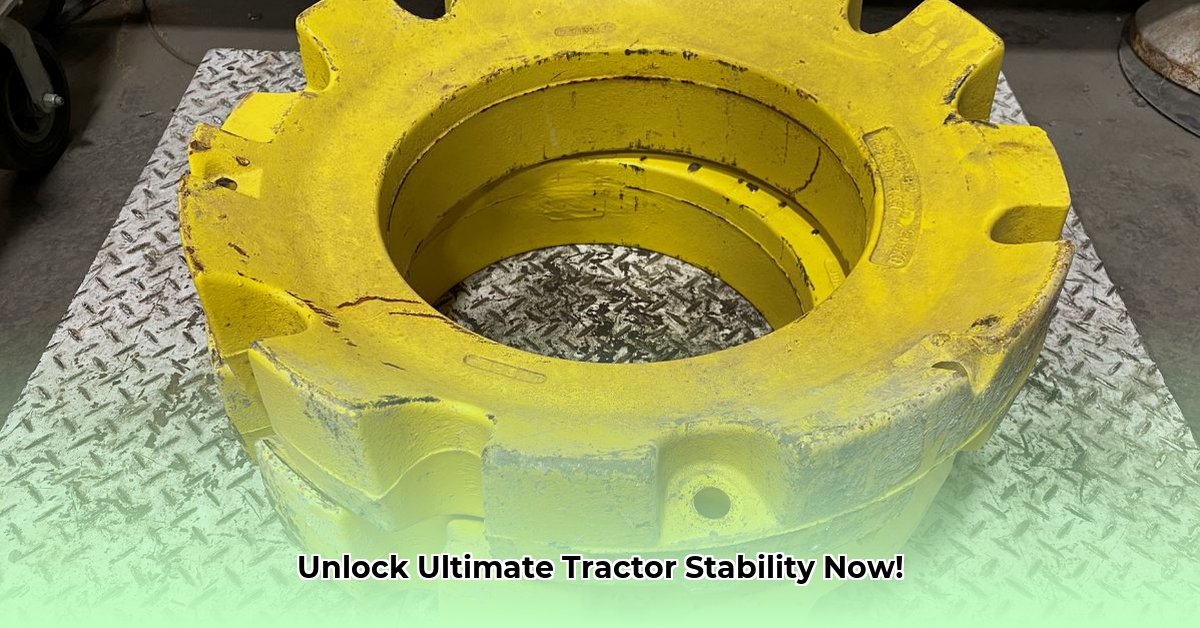
Understanding Your Tractor's Weight Needs: A Foundation for Stability
Before diving into wheel weight selection, understanding your John Deere tractor's specific requirements is paramount. Factors such as tractor model, tire size, and intended use significantly influence the appropriate weight. Overlooking these aspects can compromise stability or even lead to dangerous situations. This initial assessment is crucial for determining the correct weight and ensuring optimal performance. Isn't tractor safety your top priority? For more on tire size considerations, check out this helpful resource on tractor tire sizes.
Think of it like building a house: you wouldn't start constructing without blueprints, would you? Similarly, understanding your tractor's needs establishes a secure foundation for selecting the right wheel weights.
Choosing the Right Wheel Weights: Matching Weight to Model
Selecting the proper wheel weights hinges on several key factors. Incorrect weight selection can compromise stability and even cause accidents. Therefore, precision is non-negotiable. Let's examine the critical factors:
Tractor Model: Consult your owner's manual for specific weight recommendations tailored to your John Deere model. This is the most accurate source of information. This ensures you're using the right weights for your particular machine.
Tire Size: Larger tires generally require more weight to maintain balance, especially during challenging tasks. Weight requirements increase proportionally with tire size.
Wheel Bolt Pattern: Ensure the weight's bolt pattern precisely matches your tractor's wheel to guarantee a secure and safe fit. Improper fit can lead to weight slippage, compromising safety.
Intended Use: Intensive tasks like operating a front-end loader demand significantly more weight compared to lighter applications. Matching weight to task is vital for stability.
This careful consideration ensures the right weight choice for your specific needs and operating conditions. Failure to do so can pose a safety risk.
Weight Options: Individual vs. Bundled Packages
John Deere wheel weights are available in two primary configurations: individual weights and bundled packages. Each presents distinct advantages and disadvantages. The optimal choice depends on your specific needs and budget.
Bundled Weights: These packages typically include the weights and mounting brackets, simplifying installation. However, they may provide more weight than necessary, increasing cost and potentially affecting maneuverability.
Individual Weights: Offering greater flexibility, individual weights allow for precise weight customization. This ensures optimal balance for various tasks. However, this option may demand more time for installation and a higher initial investment.
Considering these factors will allow you to choose the most suitable option for your tractor and intended operations. The choice comes down to the balance between cost, convenience, and precision.
Installing Wheel Weights: A Step-by-Step Guide
Proper installation of wheel weights is critical for safety and performance. Careless installation can lead to accidents and compromised stability. Let’s break down the process:
Step 1: Preparation: Consult your tractor's owner's manual for specific instructions. Park your tractor on a level surface, engage the parking brake, and ensure the engine is off. Safety is paramount.
Step 2: Attachment: Carefully align the weights with the mounting points on your tractor wheels. Use the correct tools and tighten the bolts securely, but avoid over-tightening to prevent damage.
Step 3: Verification: After installation, double-check all bolts and ensure that the weights are securely fastened and do not interfere with any moving parts. Safety verification is your final step.
Remember, consulting your owner's manual for detailed instructions is essential. Improper installation poses significant safety risks.
Troubleshooting Common Issues: Addressing Weight-Related Problems
Even with careful planning and installation, issues may arise. Addressing these promptly is crucial for safety. Here are some common problems and solutions:
Insufficient Weight: If your tractor feels unstable, particularly with a heavy load, you may need to add more weight.
Excessive Weight: If your tractor struggles to maneuver, reducing the weight is necessary.
Installation Difficulties: If you encounter problems during installation, double-check compatibility and seek assistance if needed.
Remember, correctly addressing these issues maintains safety and optimal tractor performance.
Maintaining Your Wheel Weights: Extending Their Lifespan
Regular inspection of your wheel weights for damage or loose fasteners is crucial. Tighten any loose components promptly. Neglecting maintenance can create safety risks and reduce the lifespan of your equipment.
Regular maintenance ensures long-term safety and performance. Neglect can lead to potential accidents.
Conclusion: Achieving Optimal Stability and Safety
Selecting and installing the correct wheel weights for your John Deere tractor is crucial for both safety and operational efficiency. Following these guidelines ensures your tractor remains stable and performs optimally. Remember to always prioritize safety by consulting your owner's manual and seeking professional assistance when needed. Your tractor's stability is a key component of your overall safety. Remember, a well-balanced tractor is a safe tractor.